
- The innovator & her methods
Maria
Montessori.
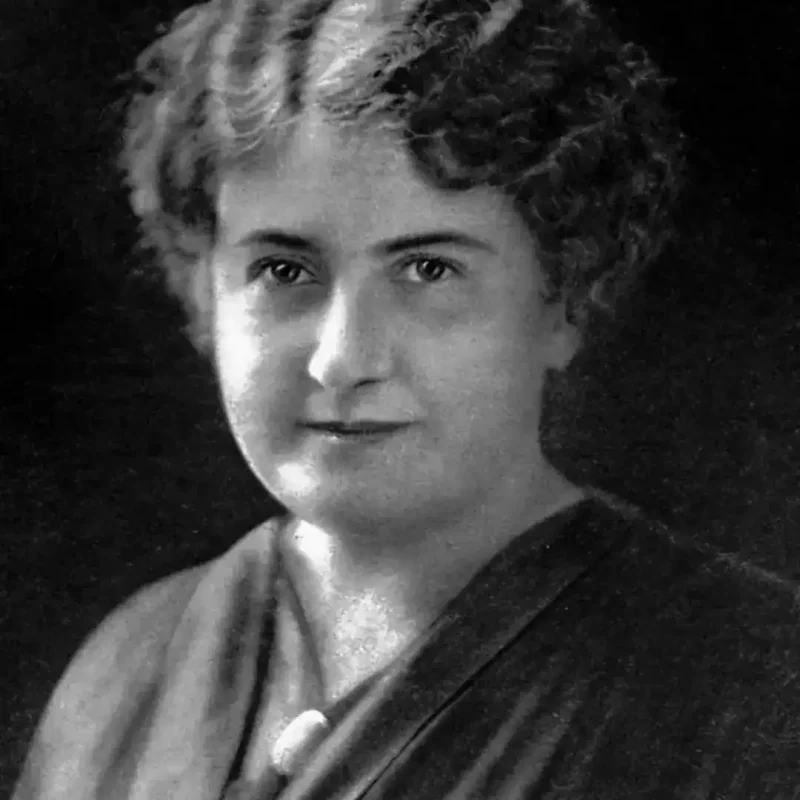
Maria Montessori was an Italian physician, anthropologist, scientist, and educator who dedicated her life to understanding how children learn. Rather than asking, “How should we teach children?” she asked, “What do children naturally need in order to learn?” Through years of careful scientific observation and research, she discovered that children thrive when they are trusted with purposeful work, given freedom within clear boundaries, and supported by a intentionally prepared environment.
Her discoveries transformed education by revealing that children are naturally curious, capable, and eager to learn when their developmental needs are respected. Instead of relying on constant adult instruction or rewards, Montessori classrooms are intentionally designed to foster independence, confidence, concentration, problem-solving, and a lifelong love of learning. More than a century later, modern research continues to support many of Maria Montessori’s observations, making her approach as relevant today as it was when it first inspired the world.
Illuminate Montessori’s early-childhood
programs provide:
Intentionally-designed learning materials
Pictured: A preschooler working with the trinomial cube, a puzzle that builds problem-solving, spatial reasoning, and attention to detail, while preparing her for algebraic concepts learned in elementary.
A curriculum for independence
At Illuminate Montessori, we believe children are capable of far more than many adults realize. From an early age, we provide meaningful opportunities for children to care for themselves and participate in real-world activities that build genuine independence. Whether learning to drink from an open cup, prepare a snack, or care for their environment, children develop confidence, coordination, focus, and a strong sense of capability. By trusting children with authentic responsibility, we help them build the skills, self-belief, and resilience they need to thrive both in the classroom and beyond.
Pictured: An infant child practices drinking independly from an open cup, building real-life Practical Life Skills through trust, patience, and hands-on experience.
One-on-one guidance and support
Illuminate Montessori guides (teachers) form personal connections with each child and observe them closely to understand their individual needs and track their progress. Children receive personal lessons in each area of the curriculum lessons designed to meet them right where they are, inspire them, and provide just the right amount of challenge to spur them on towards their next great achievement.
Pictured: A child receiving a personal lesson on the movable alphabet, a material that allows the child to compose words with wooden letters while he’s still working on building the dexterity to write with a pencil.
A supportive, mixed-age community
Pictured: An older child taking on a leadership role and demonstrating how to build the pink tower to two younger children who have recently joined the classroom.
At Illuminate Montessori, we believe every child is tremendously capable.
Every day, our children accomplish big work, solve real problems, make choices, and experience the satisfaction of learning through their own effort. Children don’t develop confidence because someone tells them what to do and when to do it, they develop it because they live it, experience it, and are an active participant in their learning every single day.
The independence, resilience, curiosity, and confidence they build here become a foundation they carry with them for the rest of their lives. As Maria Montessori said, “The education of even a small child does not aim at preparing him for school, but for life.”
How do you help babies adjust to being away from their parents?
The transition looks a little different for every child, and that’s okay. We take time to build trust by following your baby’s cues, maintaining consistent guides, and creating predictable routines. As your child begins to feel safe and secure, you’ll often notice they naturally start exploring their environment with confidence. We also partner closely with families to make the transition as smooth as possible for everyone.
What does a typical day look like?
Rather than following a rigid schedule, we follow each baby’s individual rhythms. Feeding, naps, diapering, movement, and play happen when your child is ready. For our youngest children, especially those under one year old, we honor their on-demand schedule and respond to their individual needs throughout the day.
As children grow and develop, it’s natural to see longer periods of alertness, fewer naps, a gradual transition from bottles to solid foods, and an increasing interest in participating in the daily rhythm of the community. During this time, we gently introduce predictable routines such as snack time, outdoor play, and rest time, always following each child’s developmental readiness.
We partner closely with families throughout this process to create consistency between home and school. By working together, we help children experience a reassuring sense of routine while still honoring their unique pace of growth and development.
How do you handle tantrums or challenging behaviors?
We see behavior as communication. We do not respond with timeouts, punishment, or rewards, we work to understand what a child is trying to tell us and to understand the “why” behind the behavior. We respond calmly, help children name their feelings, set clear and consistent limits, and guide them toward more appropriate ways of expressing themselves.
This modeling and gentle guidance are forms of co-regulation, helping children feel safe and supported as they navigate big emotions. Over time, these experiences build the foundation for self-regulation, allowing children to gradually recognize, manage, and express their feelings with increasing confidence and independence.
When will my child learn to read, write, and do math?
Children begin building these skills long before they formally read, write, or solve equations. Through carefully designed, didactic hands-on Montessori materials, they develop language, phonics, number sense, and problem-solving in ways that foster understanding rather than rote memorization. Because every child develops at their own pace, we don’t expect everyone to reach milestones at the same time. Instead, we prepare the environment so learning unfolds naturally when each child is ready.
We also believe that learning is strongest when schools and families work together. Through our parent portal, you’ll receive visibility on the lessons your child is receiving and their academic progress. Regular milestone meetings, parent-teacher conferences, and opportunities like “Watch Me Work” days give you a window into your child’s classroom experience, allowing you to see their growth, independence, and love of learning firsthand.
Why is the kindergarten year so important?
Children begin building these skills long before they formally read, write, or solve equations. Through carefully designed, didactic hands-on Montessori materials, they develop language, phonics, number sense, and problem-solving in ways that foster understanding rather than rote memorization. Because every child develops at their own pace, we don’t expect everyone to reach milestones at the same time. Instead, we prepare the environment so learning unfolds naturally when each child is ready.
We also believe that learning is strongest when schools and families work together. Through our parent portal, you’ll receive visibility on the lessons your child is receiving and their academic progress. Regular milestone meetings, parent-teacher conferences, and opportunities like “Watch Me Work” days give you a window into your child’s classroom experience, allowing you to see their growth, independence, and love of learning firsthand.